
All Aboard at Farringdon: Inside AlbionVC’s 30-Year Venture Journey
An exclusive look inside one of the UK’s most established venture firms, and the quiet conviction that’s kept it on track for nearly three decades.

On any crisp London morning in Farringdon, trains glide in and out of the station with a steady rhythm. Commuters hustle along the platforms, but higher above the tracks in an office on Benjamin Street, a different kind of traffic is being managed. In the quiet of AlbionVC’s headquarters, partners sip coffee over deal memos as opportunities arrive and depart like the Thameslink trains below. In venture capital as in railways, timing and judgment are everything, and Albion’s team has the seasoned calm of conductors who know exactly which opportunities to board and which to let pass. There’s no frantic rush here; after nearly three decades on the rails of startup investing, AlbionVC moves with deliberate confidence, as if following a trusted timetable while the tech world races around it.
A light rain begins to fall outside, speckling the office’s windowpanes that overlook Farringdon’s bustling junction. It’s a scene of contrasts: the frenetic energy of London’s transport hub and the measured focus inside one of the UK’s oldest venture capital firms. AlbionVC’s partners have seen booms and busts come and go; dotcom frenzy, financial crisis, unicorn mania, yet they project an aura of patience. “We take a long-term view in everything we do,” Ed Lascelles remarked softly, noting that in venture, reputation and consistency carry more weight than any flashy deal of the moment. That ethos of steady persistence is woven into Albion’s identity, and it shows. Founded in 1996, AlbionVC has been around the block of the startup ecosystem and then some, with some partners being in the game long enough to back a tiny European travel site that would become Booking.com. With nearly £1 billion in assets under management, 4 unicorns in their pocket and over 100 successfully realised exits to their name, this firm is no newcomer. In fact, it’s a pioneer that helped shape UK venture capital from its earliest days.
Thirty Years on the Venture Rails
AlbionVC, more simply known as “Albion”, opened its doors in 1996, when London’s tech scene was just beginning. Venture Capital Trusts had just been introduced in the UK a year prior, and Albion launched one of the first VCTs to fuel homegrown startups. One of those early bets was on a little-known online travel company called Active Hotels, which Albion backed and nurtured until it was acquired and folded into what is now Booking.com, the global bookings giant. “We were among the first to spot that opportunity,” Albion’s team reflects proudly, and indeed the firm’s track record is studded with such prescient calls. Over nearly 30 years, Albion has funded over 200 founding teams and guided startups to four NASDAQ IPOs, with M&A exits to the likes of Apple, Microsoft, Oracle, and more recently, seeing Humanloop acquired by the AI centacorn, Anthropic. In an industry obsessed with the next new thing, Albion’s longevity and hit rate stand out.
Part of what has kept Albion on track for so long is its focus on fundamentals. “We partner with founders for the long haul, bringing patient capital and scale-up know-how,” the firm stated, a line borne out by its evergreen investment vehicles. Unlike traditional VC funds that must return capital on a fixed timeline, Albion manages a mix of evergreen funds (including long-running VCTs) and growth funds that allow it to support companies from pre-seed all the way to pre-IPO stages. This flexible capital base means Albion isn’t forced to jump off a company’s journey too early. “As we are not tied to a fund exit timeline, our interests are firmly aligned with those of the founders,” Albion explains, emphasising that the freedom to think in years (or decades) is a competitive edge in volatile markets. In practical terms, it means Albion can keep backing a winning company through multiple rounds - as it famously did with Quantexa, backing that company from a modest seed in 2017 to its recent mega-round in 2025 - instead of handing off the baton.
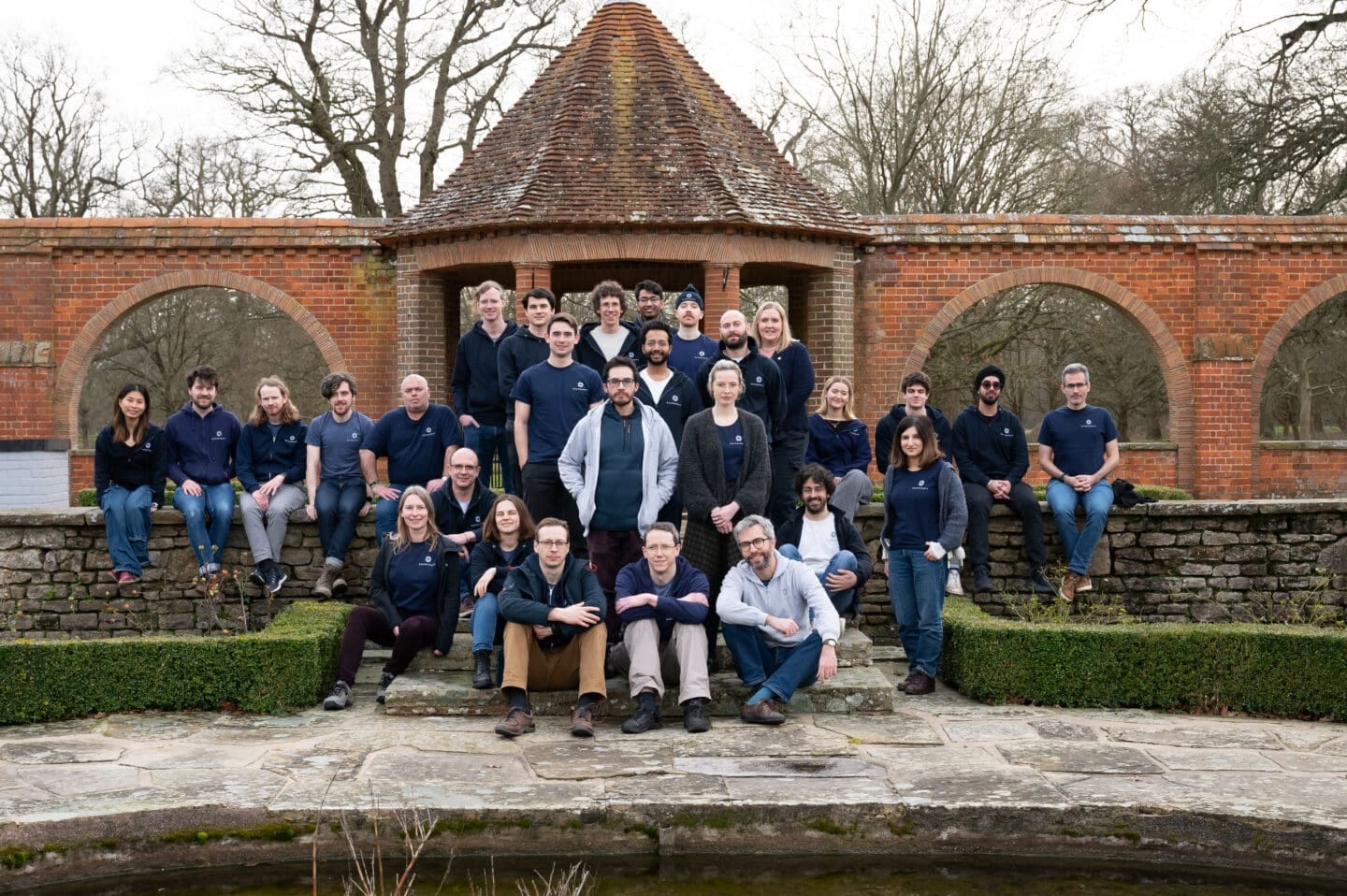
This patient strategy also extends to Albion’s culture and teambuilding. The firm’s partnership group has remarkably low turnover, lauding 12 partners with an average tenure of 12 years, and an overall team of 55 in London with average tenure around 8 years. Many on the team have effectively grown up in venture together. Walking into Albion’s offices, you won’t find the trappings of a trendy “hot fund” du jour, but rather the vibe of a close-knit crew that has weathered many seasons. “Half of [our team] have been doing this for well over a decade,” the firm notes. That continuity has bred a culture of trust and humility. Albion’s investors describe themselves as “supportive investors”, who value ethics and modesty in their interactions. While many investors obtain outsized egos for gaining similar returns, Albion’s ethos is notably down-to-earth. They prefer to let results speak: top-quartile returns, companies that reshape industries, and relationships that last for the long term.
Guided by Conviction over Spreadsheets
Over the past few weeks, I had the chance (and pleasure) to speak with Paul Lehair, a partner at AlbionVC, on numerous occasions. He is someone who embodies the firm’s new generation of investors. Lehair’s route into venture blends financial fundamentals with in-the-weeds early stage experience, moving from investment banking to stints at famous startups, Viagogo and Citymapper, before joining Albion.

It became apparent quite quickly too that these prior experiences gave him a balanced perspective on gut instinct versus data - a crucial part of being a VC. “In my earlier finance roles, the tolerance for risk was much lower,” he told me, recalling days of analysing large M&A transactions. “Moving to early-stage VC means becoming comfortable taking more calculated risks, including losing money at times. It’s a different high risk/high reward environment focused on trying to find the next outliers that can drive the power law of returns,” Lehair said. In venture, not every bet will pay off, and that’s okay. What matters is that the big wins more than make up for the misses, and those big wins often come from believing in a vision long before the numbers make sense.
That philosophy is practically Albion’s motto. “We don’t invest by numbers. We go early and build conviction,” the team likes to say. It’s an approach that blends analysis with an almost emotional commitment to a founder’s mission. Lehair elaborates that when Albion evaluates a startup, beyond the financial models and TAM slides, they are hunting for signal in the noise - the telltale signs of an exceptional founder. “We look to invest in exceptional founders with outlier potential,” he explains. They are often “bold, ambitious, but also deeply researched - the kind of people who know their domain inside out” I was told as Paul described the qualities that make him lean in during a pitch. While a clear, differentiated vision paired with great storytelling, unyielding ambition and an obsession with the problem being solved keeps a founder pushing through adversity. Perhaps most importantly, Lehair said, is pace of execution. He smiled as he recalled how some founders simply move at lightning speed: “an extremely high pace in execution” that can leave others scrambling to catch up. When Albion spots that rare mix of vision, drive, and rapid execution, they pay attention - even if the startup is little more than a prototype and a dream. In fact, those are often the opportunities Albion loves most: the ones others might dismiss as too early or unproven.
Lehair’s own enthusiasm for founders is palpable. “I love working in venture because it gives me the opportunity to constantly meet so many founders and companies who are each trying to challenge the status quo,” he said. “It’s very intellectually stimulating to be always learning about new themes and technologies.” That genuine curiosity and optimism is a hallmark of Albion’s team. While they crunch data and conduct diligence with rigour, they ultimately know that venture is a people business. You have to believe in the people you back. As Lehair puts it, being a VC means “working alongside founders and trying to help them as best as I can in the background”, rather than being in the spotlight yourself. It’s clear that Albion’s calm demeanour isn’t due to lack of excitement - it’s a reflection of confidence in their process. They trust their gut when it’s backed by experience and domain insight, and they’re willing to bet on intangibles like founder chemistry. (As I was told, “reputation speaks louder than any website or AI copy” in this business - ultimately it comes down to the relationships you build.)
This conviction-led strategy also means Albion doesn’t shy away from leading rounds at the earliest stages. The firm often writes the first institutional check and then keeps doubling down. Take Quantexa, for example. Albion was the first institutional investor in this London-based AI startup back in 2017. Many others might have passed on a young company tackling money laundering with network analytics, but Albion saw the spark. They helped Quantexa grow, participated in every round since, and one of Albion’s partners, Ed Lascelles, still sits on Quantexa’s board today. That early conviction paid off spectacularly: by March 2025 Quantexa had raised a $175 million Series F at a $2.6 billion valuation, achieving the vaunted “centaur” status with over $100M in ARR along the way. Stories like that are what Albion lives for. They are not quick flips, but long journeys from idea to global category leader.
Thesis-Driven: Software, Healthcare, and the Frontiers of Deeptech
If there’s a guiding map for which opportunities AlbionVC chooses to follow, it’s their thesis-driven approach across three core domains: software, healthcare, and deeptech. Rather than chase every hot trend, Albion sticks to areas where its team has built deep domain expertise. “As a specialist VC investor we go very deep in the sectors we invest in,” the firm notes, explaining that this focus allows them to come into deals with a prepared mind.
In software, Albion zeroes in on sub-sectors like fintech, digital risk, data/AI, and even emerging arenas like climate tech. In healthcare, they concentrate on healthtech and biotech innovations that can deliver better outcomes for patients (an area where their track record includes Europe’s top digital health success, more on that soon). And in deeptech, Albion has cultivated a particularly strong “Frontiers” strategy, from turning the cutting-edge research of UK universities into high-growth companies.
On that last front, Albion is arguably among the pioneers in commercialising UK academic research. The firm saw early that Britain’s world-class universities (Oxford, Cambridge, UCL, Imperial among many more) were treasure troves of innovation waiting to escape the lab. Historically, the UK produced fewer tech unicorns from academia compared to the US, a gap that Albion perceived as an opportunity. So in 2016, Albion launched a dedicated university spinout initiative that they now call the Frontiers strategy. Over nearly a decade, Albion refined a repeatable process for building companies within the university environment. “We’ve partnered closely with universities and developed a model - aligning incentives, pairing researchers with seasoned operators, bringing flexible early funding, and focusing on speed rather than just patent protection,” David Grimm told me. The results have been dramatic: Albion’s deeptech portfolio companies have collectively raised over a billion pounds, proving that lab-born ventures can scale to global markets.
One recent example is Phasecraft, a quantum computing algorithms startup that spun out of UCL and University of Bristol. Albion invested early alongside university seed funds and watched Phasecraft make technical leaps in an esoteric field. Just this year, Phasecraft closed a $34 million Series B co-led by Plural (the fund from Wise co-founder Taavet Hinrikus) and Playground Global, with Albion and NovoNordisk participating in the round. It’s precisely the kind of Frontier deal Albion loves: deeply technical, born from UK science, and requiring patience to nurture. “We firmly believe we are at a unique moment in time to help create a new generation of European leaders with IP at their core,” Albion wrote in a recent deeptech report. The motivation isn’t just financial - there’s a sense of mission, to help underpin European innovation and sovereignty by keeping top scientific talent in the UK and scaling it up.
Albion’s conviction in this thesis shines throughout their portfolio. They’ve helped incubate startups working on everything from next-gen compute architectures to novel medical therapies, often partnering directly with labs. And when these companies are ready to grow, Albion can bring not only capital but also sector-specific networks and knowledge. For instance, the firm’s healthcare team has backed ventures like Oviva, a Swiss-British digital health company tackling obesity and diabetes through a virtual clinic model. Albion co-led Oviva’s seed round in 2016 and has re-upped in every round since. Over that time, Oviva grew from a scrappy idea to Europe’s leading virtual clinic for weight-related diseases, treating over 1 million patients across the UK and Europe. By 2021, Oviva’s app-delivered nutrition programs had attracted significant funding (including a $80M Series C co-led by Sofina and Temasek, with participation from Earlybird too), and by mid-2025 Oviva proudly announced it had reached the milestone of one million people helped, the first European digital health company to do so. Albion’s role throughout was not just writing checks, but opening doors and being a premium partner to the team.
“Our combined experience, sector knowledge and network enable us to win and support our companies to global category leadership,” Albion says of its thematic focus. The deep sector conviction that Albion brings means when they decide to back a company, they go all in. Another case in point: Gravitee. In 2021, Albion spotted an open-source API management platform out of Lille, France, that was bootstrapped yet punching above its weight. Sensing a category leader in the making, Albion joined the ride and went onto co-lead the Series A alongside Oxx. This May, Gravitee hit a major milestone with a $60 million Series C led by Sixth Street - a vote of confidence that included AlbionVC again participating. Gravitee’s journey from a small French startup to an international player with hundreds of enterprise customers underscores how Albion sticks with its convictions.
“We saw this as a powerful signal of the strength and passion of the founding team,” Lehair wrote about Gravitee, recounting how Albion believed in the startup’s vision to simplify the complex world of APIs. The gamble appears to be paying off as Gravitee now counts names like Michelin and Roche as customers, and was named a Leader in Gartner’s Magic Quadrant just a year after Albion’s initial investment.
To read more about why Albion invested, check out this article. One of the biggest things I have learned and come to appreciate with Albion is the extensive catalogue of materials they have, from articles in their Spotlight on their own site to Medium posts galore.
Breakout Journeys and Quiet Wins
The true measure of a venture firm is the success of its portfolio, and AlbionVC’s portfolio reads like a cross-section of purposeful innovation. Across fintech, health, and frontier tech, a number of breakout companies have put Albion on the map. We’ve already mentioned Quantexa’s rise in anti-fraud AI and Oviva’s leadership in digital health. Albion was also an early backer of Elliptic, a pioneer in blockchain analytics and crypto compliance since 2019. When Elliptic raised a $60 million Series C in 2021 to expand its cryptoasset risk management platform, AlbionVC was among the participating investors alongside heavyweights like SoftBank’s Vision Fund. That bet reflected Albion’s foresight into the digital assets space - Elliptic today is trusted by over 700 financial institutions in more than 30 countries to monitor crypto transactions for fraud and AML compliance. Albion team continue to be excited by visionary founders building platforms that bridge traditional finance and the digital asset economy.
Then there’s Gravitee, as discussed, championing the next generation of API infrastructure. And not to be overlooked, Albion’s portfolio boasts companies like Koru Kids (a childcare tech platform), Credit Kudos (fintech, acquired by Apple in 2022), and Egress (email security, which delivered a 7x return to Albion’s investors upon exit). This pattern of “first believer” and continued supporter is Albion’s hallmark. Many of their first-check investments have grown into category leaders; take TransFICC, a team who are building infrastructure for fixed income trading. Albion backed the firm in early 2020, and then at the start of this year, TransFICC closed a $25 million Series B led by Citadel Securities, bringing its total raised to $50 million.
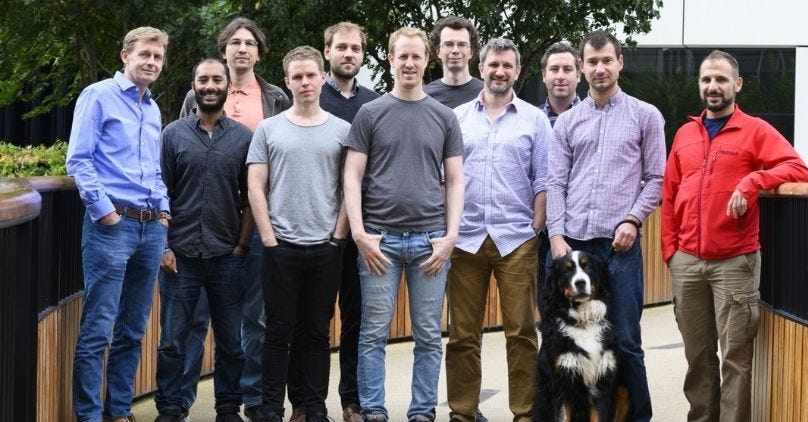
What’s notable is how un-flashy many of these companies were at the start. Albion often gravitates toward founders building mission-driven, B2B, or research-based ventures that might be off the trendy radar. And yet those can yield massive outcomes. A partner at another fund once quipped that Albion has a knack for “picking the dark horses” - startups that don’t fit the Silicon Valley mold of the moment, but turn out to be thoroughbreds. The firm’s leadership likes to frame it differently: discipline and depth over hype. By sticking to areas they understand deeply (and avoiding herd mentality), they consistently find value others miss.
Take Tem, for example, an Albion-backed startup using AI to make renewable energy trading accessible to small businesses. Albion saw real merit in Tem’s mission for clean energy accessibility, led the seed, and helped the company raise £10.5M to scale in the UK’s SME market. Or Treefera, applying AI to supply chain sustainability, which Albion supported through a $30M Series B as it expands globally. These may not be unicorns (yet), but they embody the kind of impactful innovation Albion wants to champion - the “real outcomes for society” mentioned in its boilerplate. When those outcomes materialise, as they have with over 5,000 jobs created across Albion’s portfolio and more than 1 million patient outcomes improved via companies like Oviva, the returns follow naturally.
The Human Side of Albion
Venture capital is often a people business on both sides of the table, and AlbionVC seems to recognise that in how it’s built its own team culture. Despite managing substantial funds, Albion operates with the feel of a family business. “We embody a close-knit, single-team collaborative culture. This means we win and lose together,” the firm said of its internal ethos. Spend any time with the Albion crew and you’ll notice the camaraderie: good-naturedness amongst partners, stories of team hiking trips, and a notable lack of hierarchy in discussions.
The culture places a big emphasis on humility and learning. Albion’s investors don’t see themselves as all-knowing or as operators parachuting in to run companies. Several founders in their portfolio have praised Albion’s style as being a true partner. They provide advice and resources when needed, but never overstepping or hogging credit. Albion even publishes a “Wall of Love” highlighting unfiltered testimonials from founders - a reflection of how much they care about relationships.
An interesting aspect of Albion’s human-centered approach is the platform support they offer to startups post-investment. Long before platform became a buzzword in VC, Albion quietly built out in-house resources to help their founders scale. Today, they have a dedicated Platform team and Operating Partners on staff who jump in to assist portfolio companies on key challenges. This can range from recruiting senior talent, to refining go-to-market strategy, to prepping for the next fundraise. Albion also taps a network of 100+ growth advisors - experts and experienced operators in various fields - who can be called upon to mentor or consult with founders when specific issues arise.
By providing this tailored know-how, Albion aims to be more than just a source of capital; they strive to be a scaling partner. As one founder put it, “Albion feels almost like an extension of our team, especially when we were closing big hires and needed the extra horsepower on strategy.” It doesn’t hurt that Albion’s partners themselves often have deep operational or technical backgrounds (for instance, Valerie Aelbrecht as an exited foodtech founder, and Dr. Andrew Elder leads health investments drawing on his medical past as a neurosurgeon). When you meet Albion’s team, you encounter a group of specialists as much as investors - people who genuinely geek out on the sectors they cover.
The firm also keeps things fun and grounded. In what might be a unique tradition among VCs, every two years Albion takes the entire team on an “Albion Away Trip”, a company offsite where, notably, there is no formal agenda aside from church visits. The emphasis is purely on bonding (and perhaps some friendly competition at whatever sport or activity is at hand). One fun fact I discovered through my research was that one of Albion’s partners doubles as a DJ and can be spotted spinning decks at tech community events on occasion - I’ll let you find out who.
These personal quirks and traditions underscore a culture where people enjoy working together and don’t take themselves too seriously even as they take the work very seriously. It’s a culture that prizes humility (a word that comes up frequently in conversation) and collective success over individual glory. The team’s longevity and cohesion suggest that when they win, they tend to win together quite a lot.
Staying on Track in a Noisy Ecosystem
London’s venture ecosystem has exploded in size and noise over the past decade. Dozens of new funds have launched; big international players have set up shop; trends from crypto to generative AI swing in and out of fashion with each funding cycle. Amid this din, AlbionVC has remained a steady, thoughtful presence - the serious shop with depth and history to cut through the chatter.
In the words of one industry observer, “Albion is like the grown-up in the room in London tech - they’ve seen it all, and it shows in how they operate.” That maturity is increasingly a differentiator. In frothy times, any VC can make noise; in turbulent times, founders look for those who have been there before. With nearly 30 years in the game, Albion has certainly been there, done that, and kept a reputation for integrity intact.
As I step out of Albion’s office and back onto the bustling streets of Farringdon, the metaphor isn’t lost on me: venture deals really are like trains. Another opportunity will be along any minute, but knowing which ones to climb aboard is the real art. AlbionVC has spent decades honing that instinct - marrying data with gut feel, thesis with open-mindedness, and ambition with patience.
From the platform 1 of their Farringdon base, they’ve dispatched many startups on journeys that changed industries. And they show no signs of slowing down. The lunchtime rush is underway now; a train rumbles in below carrying new passengers. Up in Albion’s offices, perhaps a new founder with a bold idea is sitting down to pitch, and the team is quietly evaluating if this could be the next outlier to join their long roster.
In an ecosystem prone to short-term thinking, the commitment to every founder’s journey makes Albion a rare breed: a venture firm that knows when to be patient and when to press forward, keeping its compass set firmly on building enduring companies.
The train doors close, the signal turns green - and AlbionVC remains confidently on track.
Great piece! NovoNordisk should be Novo Holdings; small change in text but huge difference in company. Novo Holdings is the asset management firm that is a shareholder in NovoNordisk and 180 other portfolio companies.